Anatomy, histology and physiology
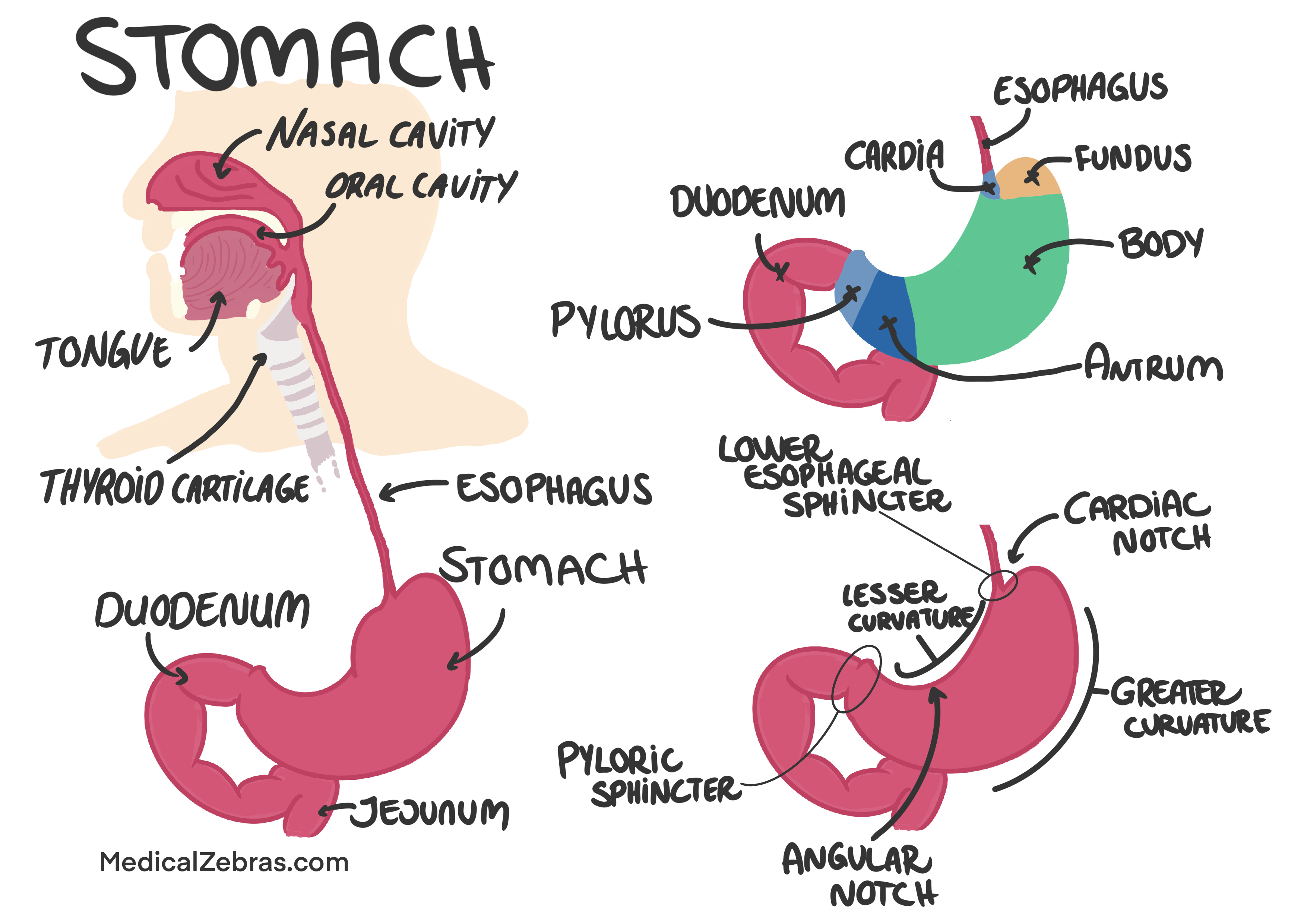
The stomach is a muscular, hollow organ located in the upper
abdomen, just below the diaphragm. It plays a crucial role in
the digestive system by breaking down food and mixing it with
gastric juices to form a semi-liquid substance called
chyme. The stomach is divided into several regions:
The stomach wall is composed of four main layers:
-
Cardia: The area where the esophagus connects to the stomach.
-
Fundus: The upper part of the stomach that stores undigested food
and gases released during digestion.
-
Body: The main central region of the stomach where most of the
digestive processes occur.
-
Antrum: The lower portion of the stomach that grinds and mixes
food with gastric juices.
-
Pylorus: The region that connects the stomach to the small
intestine and regulates the passage of chyme into the
duodenum.
Histology
the histology of the stomach is different depending on the region. The cardia and pylorus contain primarily mucus-secreting cells, while the fundus and body contain a mix of mucus-secreting cells, parietal cells (which secrete hydrochloric acid), and chief cells (which secrete pepsinogen). The antrum contains G cells that secrete the hormone gastrin, which stimulates acid production in the stomach.The stomach wall is composed of four main layers:
-
Mucosa: The innermost layer that contains gastric glands
responsible for secreting digestive enzymes and acids. It is
lined with epithelial cells, including mucus-secreting
cells, parietal cells
(which secrete hydrochloric acid), and
chief cells
(which secrete pepsinogen).
-
Submucosa: A layer of connective tissue that contains blood vessels,
nerves, and lymphatics.
-
Muscularis externa: A thick layer of smooth muscle responsible for the
churning and mixing movements of the stomach.
-
Serosa: The outermost layer that covers the stomach and connects
it to surrounding structures.
Pathology, disorders, symptoms and treatment
Gastritis
Gastritis is the inflammation of the stomach lining, which can be acute or chronic.
Causes
-
Helicobacter pylori bacteria
-
Excessive alcohol consumption
-
Prolonged use of nonsteroidal anti-inflammatory drugs
(NSAIDs)
-
Stress-related mucosal damage
-
Autoimmune disorders
Symptoms:
-
abdominal pain, nausea, vomiting, bloating, and loss of
appetite.
Diagnosis:
-
endoscopy with biopsy, blood tests for H. pylori antibodies,
stool tests for H. pylori antigens, and urea breath tests.
Treatment:
-
addressing the underlying cause, such as eradicating H.
pylori infection with antibiotics (often two types of
antibiotics combined with proton pump inhibitors), avoiding
NSAIDs, and using medications to reduce stomach acid
production, such as proton pump inhibitors (PPIs) or H2
receptor blockers.
Peptic Ulcers
Peptic ulcers are open sores that develop on the inner lining of the stomach (gastric ulcers) or the upper part of the small intestine (duodenal ulcers).
Causes:
-
Helicobacter pylori infection
-
Prolonged use of NSAIDs
-
Excess stomach acid production
-
Stress
-
Excessive alcohol consumption
Symptoms:
-
burning stomach pain, bloating, heartburn, nausea, and in
severe cases, vomiting blood or black stools.
Diagnosis:
-
endoscopy with biopsy, barium swallow X-rays, and tests for
H. pylori infection (blood, stool, or urea breath tests).
Treatment:
-
antibiotics to eradicate H. pylori, acid-reducing
medications (PPIs or H2 receptor blockers), and lifestyle
modifications such as avoiding spicy foods, alcohol, and
smoking.
Gastroesophageal Reflux Disease (GERD)
Is when stomach acid flows back into the esophagus, often because of a weakened lower esophageal sphincter or hiatal hernia.
Causes:
-
Weak lower esophageal sphincter
-
Hiatal hernia
-
Obesity
-
Pregnancy
-
Certain foods and drinks (e.g., fatty foods, coffee,
alcohol)
- Heartburn (a burning sensation in the chest, especially after eating or at night, worsening when lying down).
- Regurgitation of food or sour liquid - in some cases a sensation of a lump in the throat.
- Persistent cough, especially at night or after meals.
- Chest pain (can even in some cases mimic heart attack)
Symptoms:
- 24-hour esophageal pH monitoring, done by placing a small probe in the esophagus to measure acid levels over a day.
- Endoscopy, to visualize the esophagus and stomach lining for inflammation or damage.
- Esophageal manometry, to assess the function of the lower esophageal sphincter and esophageal motility.
- Barium swallow X-rays, to visualize the esophagus and stomach during swallowing.
Diagnosis:
- Proton pumps inhibitors (such as omeprazole)
- Antacids (such as Gaviscon, Tums)
- H2 blockers (such as cimetidine, nizatidine)
Treatment:
-
Lifestyle changes (for example weight loss or dietary
modifications, excluding things that lead to symptoms).
Medication: